
About Me
I’m Gary, a Research Scientist at A*STAR’s Institute of Advanced Intelligence and Computing (IAIC) in Singapore, where I am part of the Transport & Connectivity Directorate.
My current research focuses on AI and learning-based methods for the engineering, design, and architecture of complex systems. I am interested in how data, domain structure, and physical constraints can help us reason about and operate systems whose interacting components and competing objectives make conventional approaches difficult to scale.
My background is in signal processing for wireless systems, including signal separation, interference mitigation, receiver design, and network optimization. I am continuing to develop this part of the work, so watch this space. One ongoing effort examines wireless connectivity for Trade and Connectivity applications, including maritime and port environments.
Alongside my formal research, I design and operate a small multi-agent setup for day-to-day research and personal workflows. My current setup coordinates specialized agents through NanoClaw and Telegram, with explicit controls over what each agent can access and do. I use it for structured coding workflows, LLM-assisted knowledge bases, and routine operations. It is also a practical testbed for making agent systems useful, controllable, and maintainable beyond a single chat window.
If you are interested in collaboration, want to discuss related research, or are looking for attachment opportunities, please reach out.
Recent writing All posts →
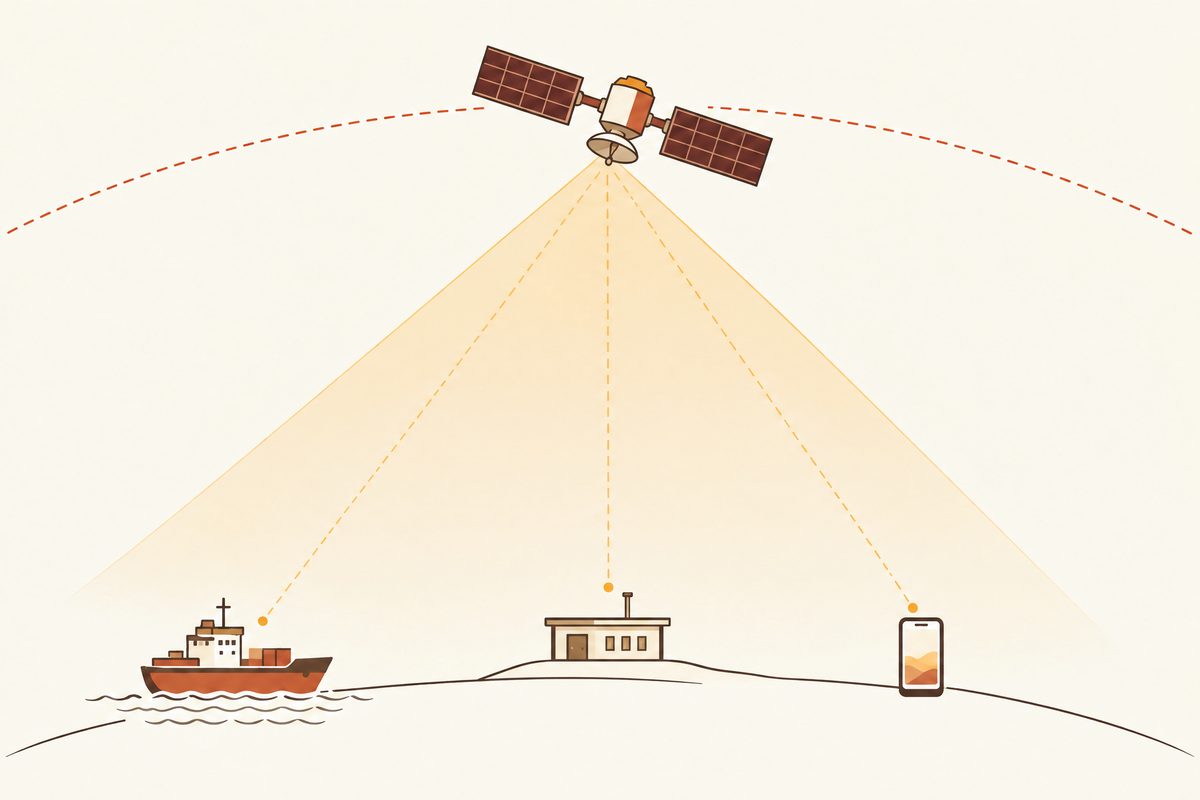
Connecting the Last Billion: The Engineering Challenges of Non-Terrestrial Networks
A satellite covering half a continent and a phone in your pocket were not designed for each other. Getting them to talk is a harder engineering problem than it might look---and the industry is still working out how.
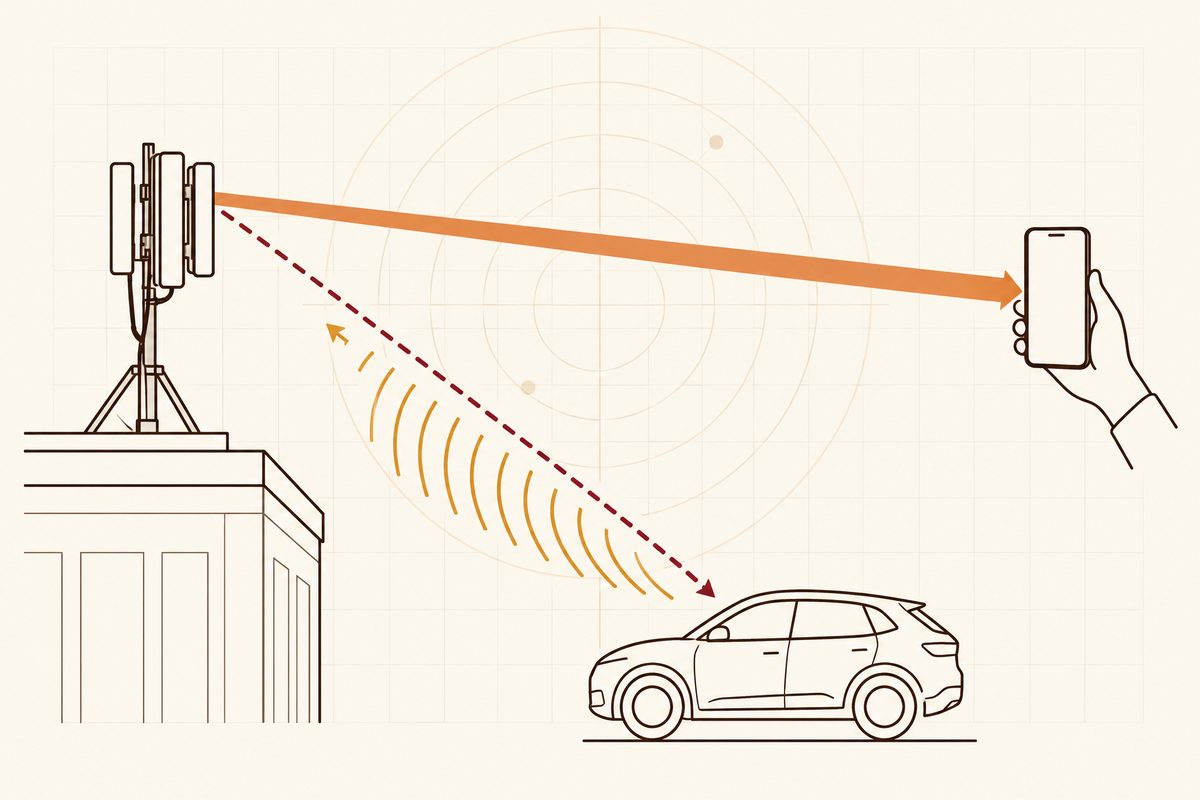
Can a 6G Base Station Double as a Radar?
A 6G base station and a radar have more in common than it might seem. ISAC---Integrated Sensing and Communication---is the 6G scenario that takes that similarity seriously. Here is where the value proposition holds up, and where it deserves a harder look.

Uncovering Hidden Structures in Wireless Systems with AI
Wireless systems have been built on a Gaussian approximation for decades. At higher frequencies, that approximation starts to cost something real. AI-native 6G is, in part, a proposal to uncover and take advantage of the hidden structure.
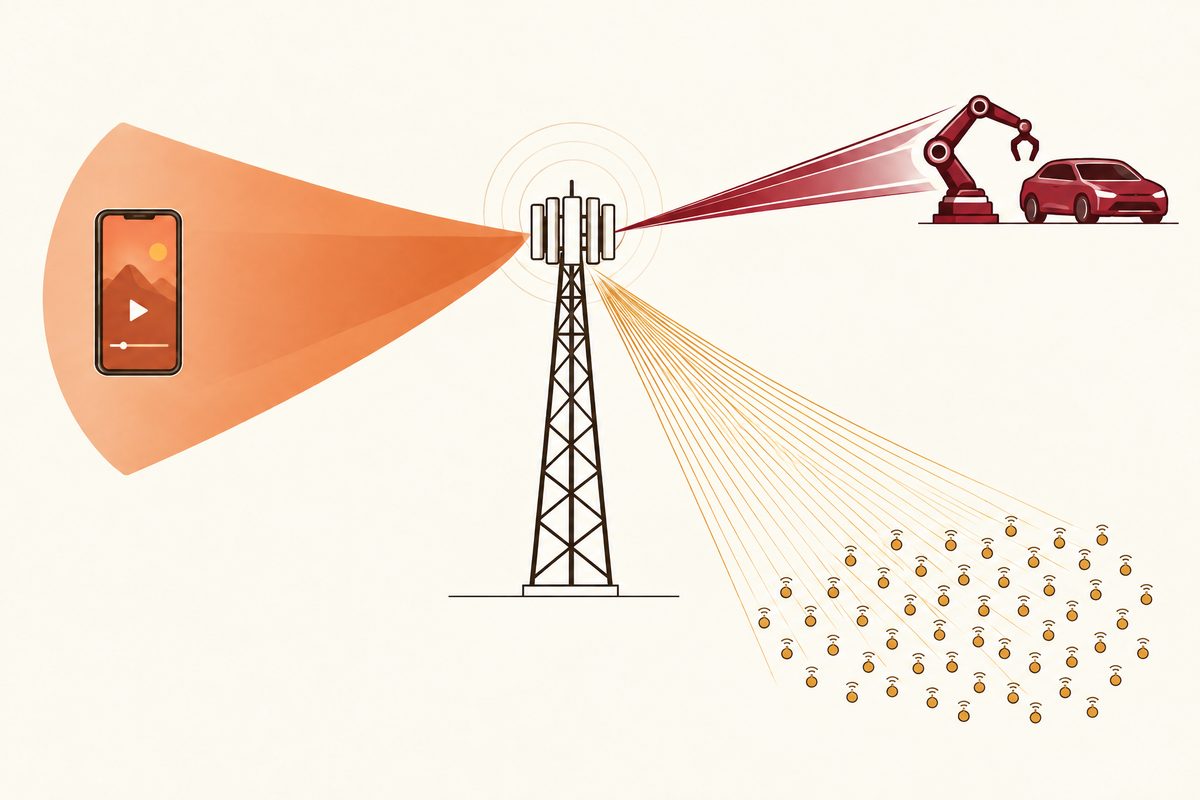
What is the deal with 5G? Is it really faster?
Most people think 5G means faster downloads. It does---but is that all? The deeper story is about what 'faster' even means, and why three different answers lead to three different engineering problems.
Wireless communications: selected background and ongoing work
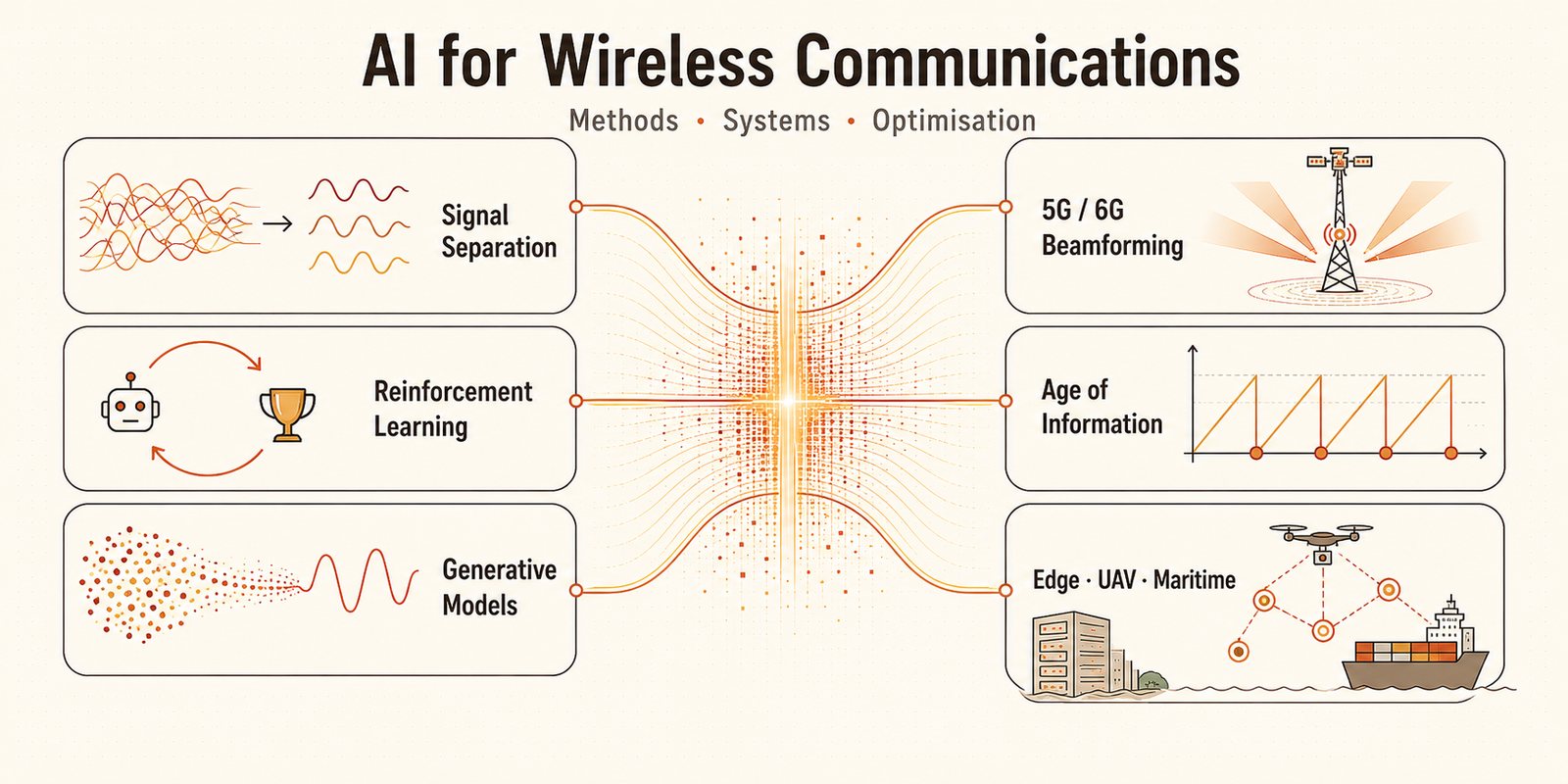
Open a card to see the related papers.
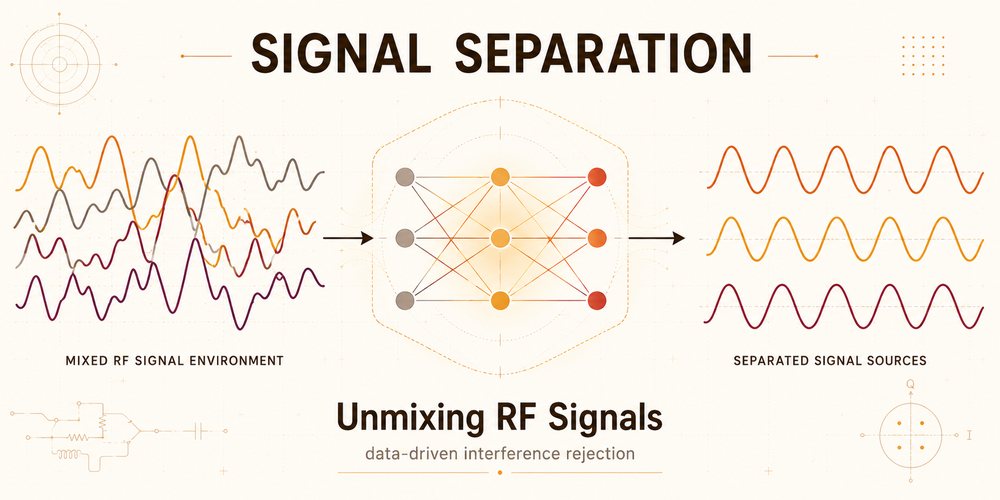
Signal Separation & Interference Mitigation
Data-driven unmixing of co-channel RF signals
6
Signal Separation & Interference Mitigation
Data-driven unmixing of co-channel RF signals
6- Exploiting Temporal Structures of Cyclostationary Signals for Data-Driven Single-Channel Source Separation (2022)
- Data-Driven Blind Synchronization and Interference Rejection for Digital Communication Signals (2023)
- On Neural Architectures for Deep Learning-Based Source Separation of Co-Channel OFDM Signals (2023)
- Score-based source separation with applications to digital communication signals (2023)
- The data-driven radio frequency signal separation challenge (2024)
- RF Challenge: The Data-Driven Radio Frequency Signal Separation Challenge (2025)
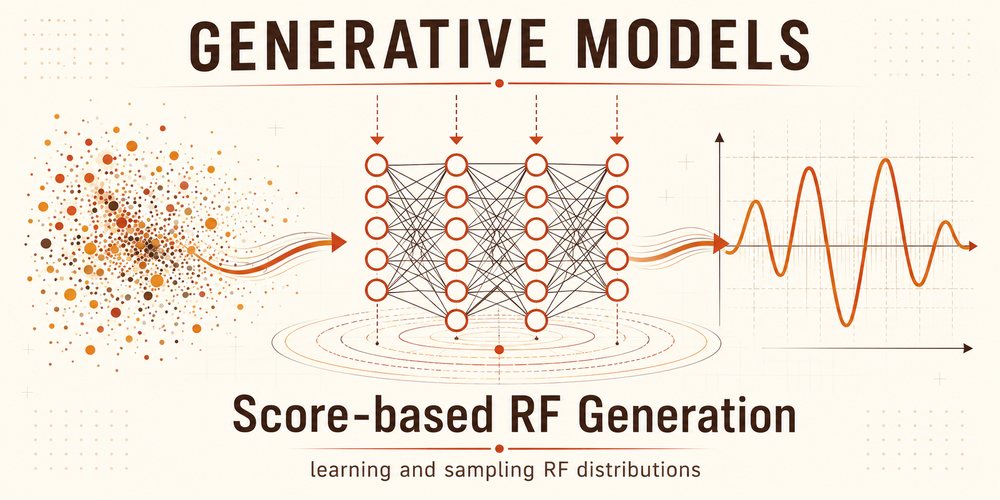
Generative Models & Language Models
Score-based priors for RF, and LLMs for wireless systems
3
Generative Models & Language Models
Score-based priors for RF, and LLMs for wireless systems
3- Score-based source separation with applications to digital communication signals (2023)
- Specializing language models for 3GPP standards: Enhancements for technical document queries (2025)
- EdgePrompt: A distributed key-value inference framework for LLMs in 6G networks (2025)
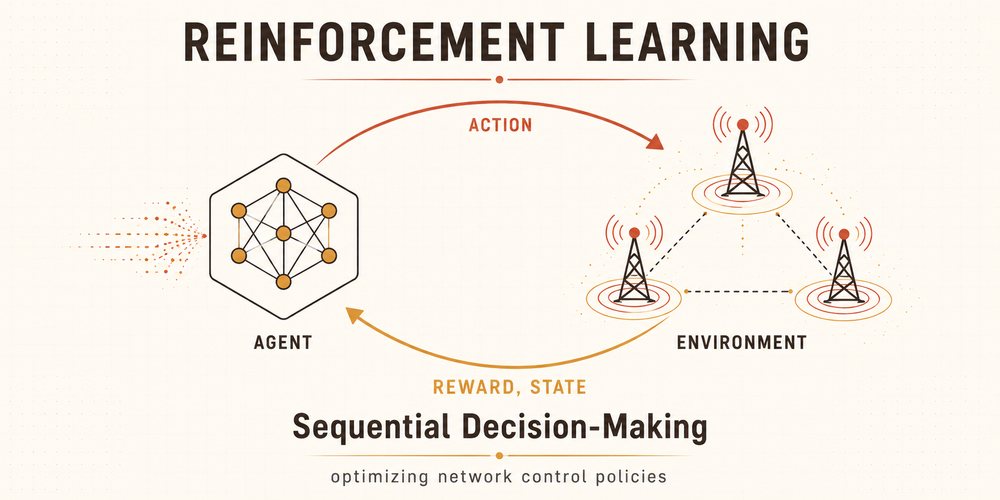
Reinforcement Learning & Optimisation
Sequential decision-making for networked systems
5
Reinforcement Learning & Optimisation
Sequential decision-making for networked systems
5- Odometry-Aided mmWave Communications Using Overparameterized Beamforming Optimization (2024)
- Sampling to achieve the goal: An age-aware remote markov decision process (2024)
- Lyapunov-guided Deep Reinforcement Learning for Semantic-aware AoI Minimization in UAV-assisted Wireless Networks (2025)
- Subarea Collaborative Deep Q-Network With Online Learning: Advanced Multi-Agent Routing Strategies for Dynamic Maritime Networks (2025)
- MARHO: Hybrid Task Offloading in Maritime MEC via Multi-Agent Reinforcement Learning (2025)
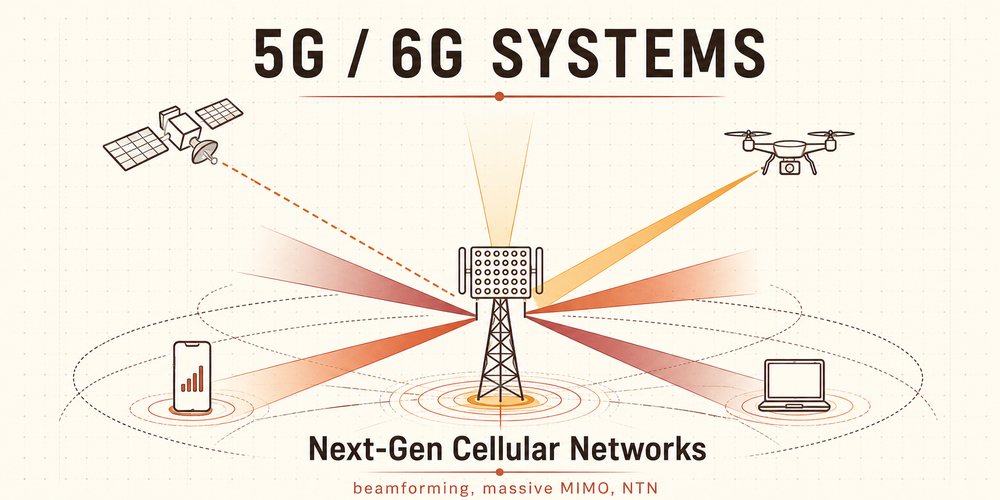
5G / 6G Systems & Beamforming
Arrays, coding, and resilient network design
5
5G / 6G Systems & Beamforming
Arrays, coding, and resilient network design
5- Robust Direction of Arrival Estimation in the Presence of Array Faults using Snapshot Diversity (2020)
- Odometry-Aided mmWave Communications Using Overparameterized Beamforming Optimization (2024)
- Unified Upper Bounds on the ML decoding Error Probability of Spinal Codes over Fading Channels (2025)
- High-Reliability Wireless Communications for Virtual Power Plant with Efficient Network Redundancy (2025)
- Testbedding of AI-Powered Resilient Dual-Wireless Network Solutions for Virtual Power Plant (2025)
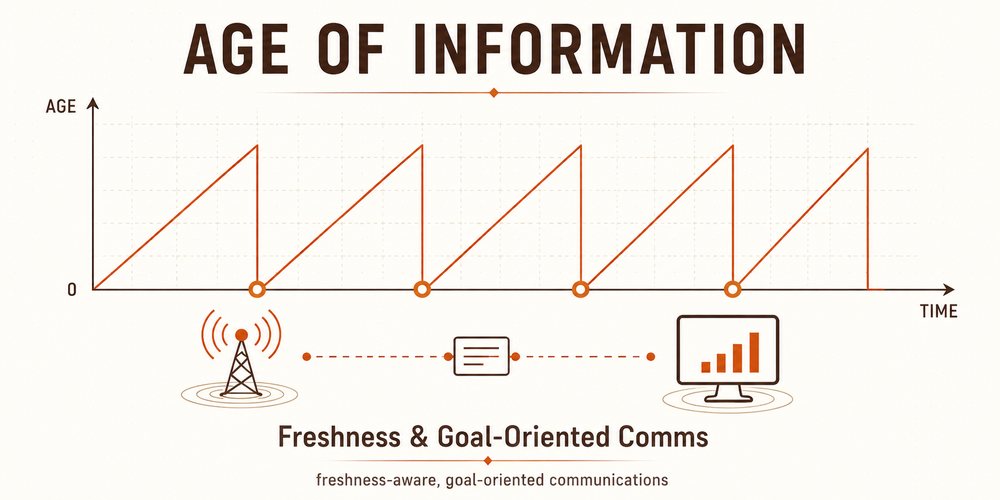
Age of Information & Goal-Oriented Comms
Sampling and communicating for the decision, not the bit
5
Age of Information & Goal-Oriented Comms
Sampling and communicating for the decision, not the bit
5- Sampling to achieve the goal: An age-aware remote markov decision process (2024)
- Lyapunov-guided Deep Reinforcement Learning for Semantic-aware AoI Minimization in UAV-assisted Wireless Networks (2025)
- Semantic Pre-Extraction for Energy-Efficient AoI Minimization in UAV-Assisted Wireless Networks (2025)
- From Freshness to Effectiveness: Goal-Oriented Sampling for Remote Decision Making (2026)
- State Estimation and Communication Co-Design in IIoT Systems: A Brief Survey (2026)
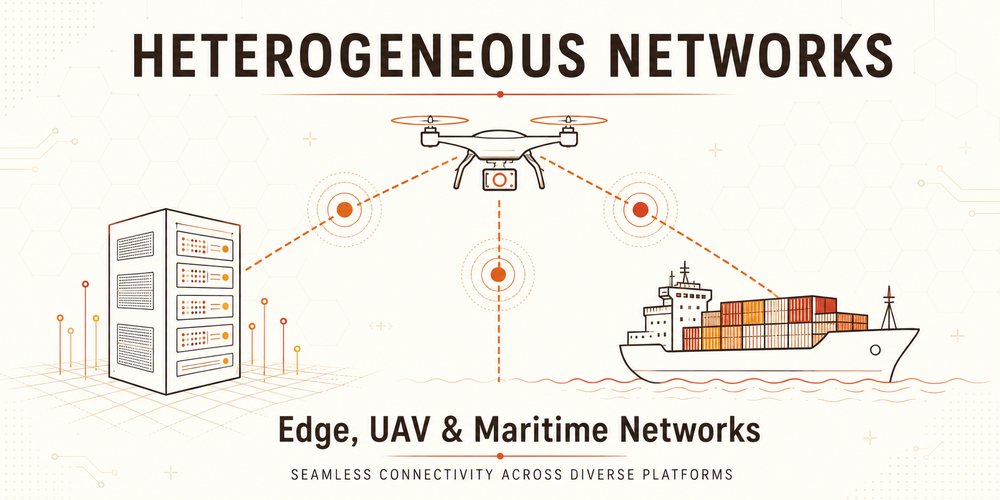
Edge, UAV & Maritime Networks
Offloading, routing, and learning at the network edge
6
Edge, UAV & Maritime Networks
Offloading, routing, and learning at the network edge
6- Lyapunov-guided Deep Reinforcement Learning for Semantic-aware AoI Minimization in UAV-assisted Wireless Networks (2025)
- Semantic Pre-Extraction for Energy-Efficient AoI Minimization in UAV-Assisted Wireless Networks (2025)
- Subarea Collaborative Deep Q-Network With Online Learning: Advanced Multi-Agent Routing Strategies for Dynamic Maritime Networks (2025)
- EdgePrompt: A distributed key-value inference framework for LLMs in 6G networks (2025)
- An Efficient and Privacy-Enhanced U-Shaped Split Federated Learning Method for Distributed Multi-Client Systems (2025)
- MARHO: Hybrid Task Offloading in Maritime MEC via Multi-Agent Reinforcement Learning (2025)
Selected publications All 28 publications →
State Estimation and Communication Co-Design in IIoT Systems: A Brief Survey
P. Li, S. Sun, G. C. F. Lee, C. Chen, S. Zhu, X. Guan, and G. P. Fettweis, “State Estimation and Communication Co-Design in IIoT Systems: A Brief Survey,” Journal of Communications and Information Networks, vol. 11, no. 1, pp. 1--21, Mar. 2026. doi: 10.23919/JCIN.2026.11474252
From Freshness to Effectiveness: Goal-Oriented Sampling for Remote Decision Making
A. Li, S. Wu, G. C. Lee, and S. Sun, “From freshness to effectiveness: Goal-oriented sampling for remote decision making,” IEEE Transactions on Information Theory, 2026
MARHO: Hybrid Task Offloading in Maritime MEC via Multi-Agent Reinforcement Learning
J. Ning, A. Li, G. C. Lee, S. Sun, and T. Yang, “MARHO: Hybrid task offloading in maritime mec via multi-agent reinforcement learning,” IEEE Open Journal of the Communications Society, vol. 6, pp. 10 322–10 337, 2025.
Advancing AI Challenges for the United States Department of the Air Force
C. Prothmann, V. Gadepally, J. Kepner, K. Borchard, L. Carlone, Z. Folcik, J. D. Griffith, M. Houle, J. P. How, N. Hughes et al., “Advancing AI challenges for the United States department of the Air Force,” in 2025 IEEE High Performance Extreme Computing Conference (HPEC). IEEE, 2025, pp. 1–8.
An Efficient and Privacy-Enhanced U-Shaped Split Federated Learning Method for Distributed Multi-Client Systems
X. Sun, T. Yang, C. Han, G. C. Lee, and S. Sun, “An efficient and privacy-enhanced U-shaped split federated learning method for distributed multi-client systems,” in 2025 IEEE International Conference on Communications Workshops (ICC Workshops). IEEE, 2025, pp. 1432–1437.
EdgePrompt: A distributed key-value inference framework for LLMs in 6G networks
J. Ning, P. Zhu, C. Zheng, G. Lee, S. Sun, and T. Yang, “EdgePrompt: A distributed key-value inference framework for LLMs in 6G networks,” in IEEE INFOCOM 2025-IEEE Conference on Computer Communications Workshops (INFOCOM WKSHPS). IEEE, 2025, pp. 1–6.